 how-to
Protein Intake for GLP-1 Users: How Much You Need Daily
Last Updated: November 4, 2026
Quick Summary
A practical protein intake for GLP-1 users is 1.2 to 1.6 grams per kilogram of body weight daily, spread across meals at 25 to 35 grams each. Weighing 80 kilograms works out to roughly 96 to 128 grams a day. Confirm your personal target with your clinician.
- Spread protein across the day with 25 to 35 grams per meal, three times daily, plus a protein-rich snack if needed.
- Eat your protein first at each meal so it gets in before early fullness sets in.
- Keep easy, protein-dense foods like Greek yogurt, eggs, and cooked chicken portions ready in the kitchen.
- Use a shake as a gap-filler when you are 20 to 40 grams short, not as a daily meal replacement.
- Choose cool or room-temperature proteins when nausea is present, since strong smells can trigger symptoms.
Table of Contents
- Why Protein Intake for GLP-1 Users Needs a Plan, Not Guesswork
- How Much Protein on GLP-1: Working Out Your Daily Target
- Spreading Protein Across the Day: Per-Meal Targets and Timing
- High-Protein Foods for GLP-1 Users: What to Keep in the Kitchen
- Best Protein Powder for GLP-1 Weight Loss: When Supplements Help
- Protein Meal Ideas for GLP-1 Users: Small-Volume Meals That Still Deliver
- Getting Started with the GLP-1 Nutrition Jumpstart Guide
- Frequently Asked Questions
Why Protein Intake for GLP-1 Users Needs a Plan, Not Guesswork
Protein intake is worth planning rather than leaving to chance on GLP-1 medications. These medications quiet appetite, and that quiet works against you at the plate.
That matters because protein helps protect muscle while you lose weight. Lose muscle, and you may feel weaker, tire faster, and struggle with everyday tasks.
This guide walks you through daily targets, food choices, and meal ideas that fit a smaller appetite.
How Much Protein on GLP-1: Working Out Your Daily Target
How much protein on GLP-1 do you actually need? A common approach is to aim for a daily protein target based on your body weight, then spread it across meals.
Your clinician can help you set the right number for your body, health conditions, and medication. Treat the ranges here as a starting point for a conversation, not a prescription.
Calculating Grams per Kilogram of Body Weight
Here is the simple math, step by step:
- Write down your current body weight in kilograms.
- Multiply it by 1.2 to get a lower daily target.
- Multiply it by 1.6 to get an upper daily target.
- Aim somewhere inside that range, guided by your clinician.
If you weigh 80 kilograms, that works out to roughly 96 to 128 grams of protein a day. That is your daily protein target.
Dietary protein guidance from Harvard Health notes that protein needs rise for people actively losing weight, since the body draws on muscle stores.
Personalizing Targets for Body Size, Age, and Health Conditions
One number does not fit everyone. Larger bodies generally need more protein. Older adults often need more, not less, to protect muscle mass. People with kidney conditions may need a lower target and should always check with their clinician first.
- Larger body size: aim toward the upper end of your range.
- Age over 60: lean toward the higher end to support muscle retention.
- Kidney or liver conditions: confirm your target with your care team.
Spreading Protein Across the Day: Per-Meal Targets and Timing
Your body uses protein best when you spread it out. Rather than one large dinner, aim for protein per meal at regular intervals. A practical pattern is 25 to 35 grams of protein per meal, three times a day, with a protein-rich snack if you need it.
Small, frequent meals often suit a reduced appetite better than three big ones. Try four smaller eating moments instead of three large plates. A common pattern is a protein-forward breakfast, a mid-morning snack, a small lunch, an afternoon snack, and a light dinner, each one modest in volume but carrying a meaningful protein dose.
Timing helps too. Try to eat some protein within a couple of hours of waking, when many people feel most able to eat. Save your easiest-to-eat protein foods for the times your appetite is lowest.
Protein Timing When Nausea or Early Fullness Hits
GLP-1 medications slow stomach emptying, which is part of why they work, and part of why a full plate can feel impossible. The following timing adjustments may make protein easier to tolerate:
- Eat before symptoms peak. If nausea tends to arrive mid-morning, front-load protein at breakfast rather than waiting.
- Separate liquids and solids. A shake sipped slowly between meals often sits better than a large meal with a drink.
- Keep meals small and stop at "comfortable," not "full." Early fullness is a signal, not a challenge.
Watch out: if nausea, vomiting, or severe early fullness persists, mention it to your clinician rather than pushing through, medication timing and dose are conversations for your care team, not something to solve by force-feeding.
A Simple Per-Meal Framework
Eating moment | Protein target | Example |
|---|---|---|
Breakfast | 20-30 g | Greek yogurt with berries |
Mid-morning | 10-20 g | Small protein shake |
Lunch | 25-35 g | Chicken and bean salad |
Afternoon | 10-20 g | Cottage cheese or edamame |
Dinner | 25-35 g | Baked fish with tofu and greens |
That pattern lands near 90-140 grams across the day without any single meal feeling heavy. Adjust portions to your own target and tolerance.
High-Protein Foods for GLP-1 Users: What to Keep in the Kitchen
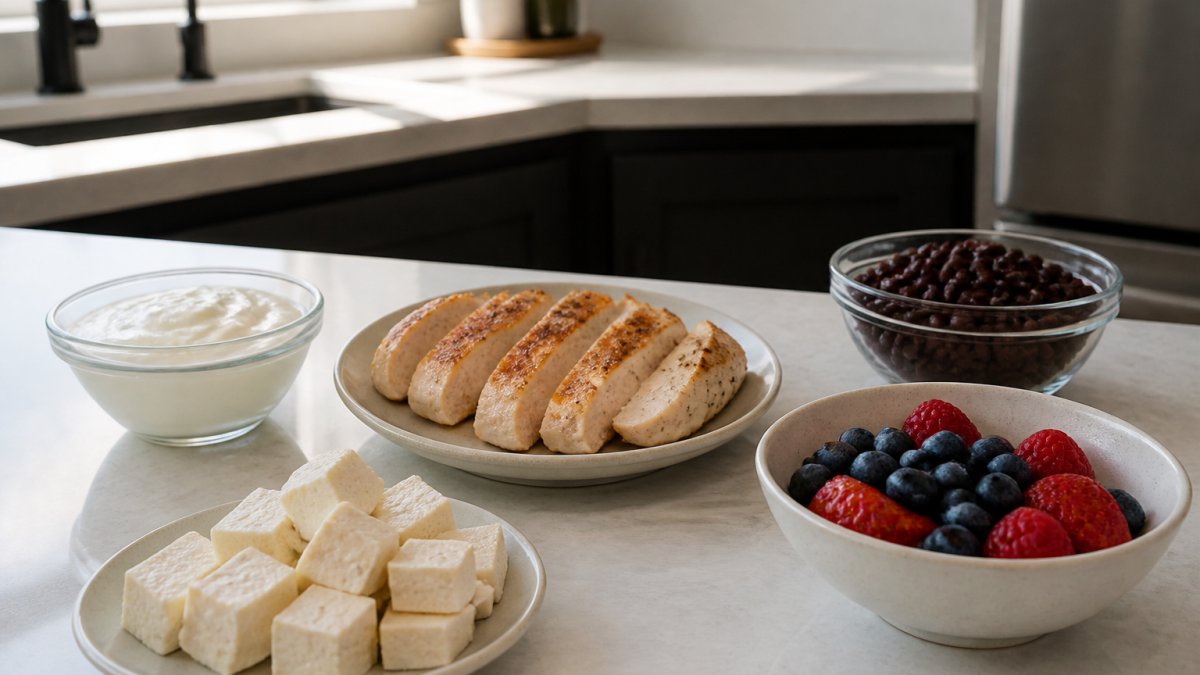
Keeping high-protein foods for GLP-1 users within reach makes the whole plan easier. When appetite is low, you will not cook something elaborate. You will eat what is already there.
Stock your fridge and pantry with easy, protein-dense foods. Small portions matter here, since large servings can feel overwhelming.
Lean Animal and Plant-Based Protein Options
Both animal protein and plant-based protein can help you hit your target. Mix them based on what you enjoy and tolerate.
- Greek yogurt: thick, easy to eat, and protein-rich.
- Eggs: quick to prepare and gentle on the stomach.
- Chicken and fish: lean protein staples; keep cooked portions ready.
Plant proteins count too. Combining beans with whole grains gives you a complete mix of amino acids. Protein guidance from the British Nutrition Foundation explains how plant-based eaters can meet protein needs by combining sources across the day.
Best Protein Powder for GLP-1 Weight Loss: When Supplements Help
The best protein powder for GLP-1 weight loss is one you can tolerate and will actually use. Supplements help most when solid food feels like too much. A shake or stirred powder delivers protein per serving without a full plate, useful on days when nausea or early fullness makes a meal unrealistic.
When a Supplement Genuinely Helps
A powder or ready-to-drink shake is a gap-filler, not a meal replacement. It tends to help when:
- You are 20-40 grams short of your daily target and a full meal is not appealing.
- Morning nausea makes breakfast difficult, but a sipped shake sits well.
- You are traveling, working shifts, or otherwise away from a kitchen.
- You need a small, low-volume protein dose between meals.
It does not help when it replaces whole meals day after day, food brings fiber, micronutrients, and chewing satisfaction that powders do not.
Reading the Label: What to Compare
Labels vary widely, so compare these four things side by side:
- Protein per serving. Aim for 20-30 grams per scoop or bottle; smaller doses mean more scoops and more volume.
- Protein type. Whey is fast-digesting and common; casein is slower; soy, pea, and blends suit plant-based eaters. A blend often balances taste and tolerance.
- Added sugar and sugar alcohols. Some flavored powders carry several grams of sugar per serving; sugar alcohols can cause bloating for some people.
- Other ingredients. Thickeners and fiber blends affect how a shake sits in the stomach, start with a small serving to test tolerance.
Watch out: powders are a supplement, not a replacement for meals, and they are not regulated the same way as medications. Check with your clinician before adding any supplement, especially if you take other medications or have kidney or liver conditions.
Plant vs. Whey: A Quick Trade-Off
Whey tends to mix smoothly and is well studied; pea and soy proteins are solid plant alternatives with complete amino acid profiles. Blends often taste better than single-source plant powders.
If you want a structured way to fit shakes into a full day of eating, the GLP-1 Nutrition Jumpstart Guide at anaisestandard.com may help you plan around a reduced appetite.
Protein Meal Ideas for GLP-1 Users: Small-Volume Meals That Still Deliver
Protein meal ideas for GLP-1 users should be small in volume but high in protein. Think nutrient intake first, portion size second. Here is a sample day to show how it fits together:
Meal | Example | Approx. Protein |
|---|---|---|
Breakfast | Greek yogurt with berries | 20 g |
Lunch | Small chicken and bean salad | 30 g |
Snack | Protein shake | 25 g |
Dinner | Baked fish with tofu and greens | 30 g |
That lands near 105 grams without any meal feeling heavy. Adjust portions to your own target.
Eating Protein First When Appetite Is Low
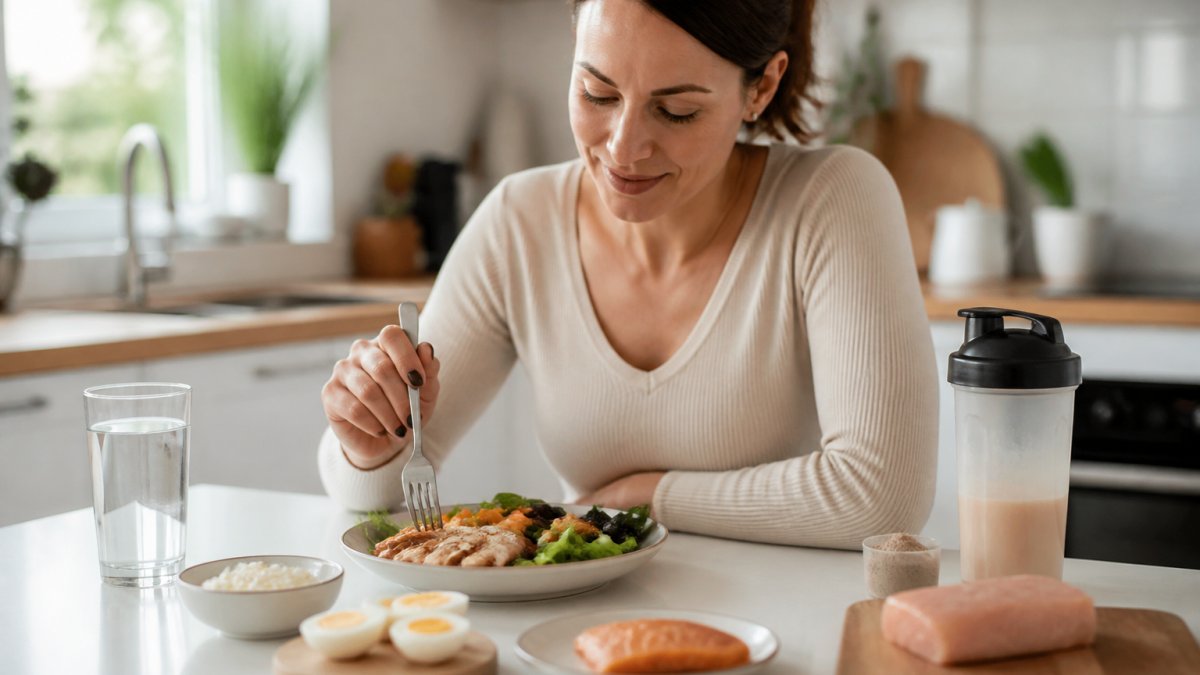
When you feel full fast, eat your protein first. Take a few bites of chicken, fish, or yogurt before anything else on the plate.
- Start with the protein, then the vegetables, then grains.
- Keep portions small and add more only if you feel able.
- Eat slowly and stop when comfortable, not stuffed.
If nausea or early fullness makes eating hard, mention it to your clinician. They can help you adjust.
If you want a structured, sustainable way to build these habits, our guide on whether a sustainable diet for weight loss is actually possible walks through the approach in more depth.
Getting Started with the GLP-1 Nutrition Jumpstart Guide
The GLP-1 Nutrition Jumpstart Guide from Anaise Standard is designed for people who know protein matters but find eating difficult on medication.
The approach is evidence-informed and practical, aiming to fit everyday routines.
You do not have to figure this out alone. Speak with your clinician about your protein target, then use our guide to put it into practice.
Frequently Asked Questions
How much protein do I need if I am on a GLP-1 medication?
There is no single number that fits everyone, but a common starting point in nutrition guidance is roughly 1.2 to 1.6 grams of protein per kilogram of body weight per day, adjusted for your size, age, activity level, and any health conditions. A person weighing 80 kg would land somewhere around 96 to 128 grams daily. Because GLP-1 medications reduce appetite, that total is easier to reach when it is spread across three or four small meals rather than two large ones. Ask your prescriber or a registered dietitian to confirm a target that suits you.
What are the best high-protein foods for GLP-1 users?
Prioritize protein-dense foods that deliver a lot of protein in a small volume, since early fullness is common. Greek yogurt, cottage cheese, eggs, chicken, fish, tofu, tempeh, lentils, and beans all work well. Pair plant proteins such as beans with whole grains to cover the full range of amino acids. Keep a few ready-to-eat options in the fridge so a low-appetite day does not turn into a skipped meal. Protein per serving matters more than perfection, so choose foods you will actually eat.
Are protein shakes a good option while taking a GLP-1 medication?
They can be, especially on days when nausea or early fullness makes solid food difficult. A shake delivers protein per serving in a small volume and is easy to sip slowly. Look for a powder with a complete amino acid profile, limited added sugar, and an ingredient list you recognize. Supplements support your intake; they do not replace meals entirely. If you are unsure which type suits you, bring the label to your dietitian or prescriber before buying.
What happens if you don't eat enough protein while on GLP-1?
When calorie intake drops quickly and protein is low, some of the weight lost can come from muscle rather than fat. That can affect strength, physical function, and how you feel day to day. Protein intake for GLP-1 users is therefore about protecting lean body mass, not just hitting a number. Signs to watch include persistent fatigue, feeling weaker during everyday tasks, and hair shedding. Raise any concerns with your prescriber or dietitian, who can review your intake and adjust your plan.
Getting enough protein on a GLP-1 medication takes a little planning, but it is very doable. Start with your daily target, spread it across small meals, and keep easy protein foods on hand. If you would like support, Anaise Standard offers tailored nutrition pathways, practical meal planning, and guidance built for GLP-1, midlife, and metabolic health. Get started with Anaise Standard and build a protein plan that fits your everyday life.
Ready to build healthier nutrition habits while taking GLP-1 medication? Explore the Anaise Standard GLP-1 Nutrition Jumpstart Guide, a practical resource to help you prioritize protein, hydration, and balanced eating.
Get your GLP-1 Nutrition Jumpstart Guide for $47:
https://api.thearios.com/payment-link/6a9df70ca7f78e147447f37b