
 ultimate-guide
Is a Sustainable Diet for Weight Loss Actually Possible?
Last Updated: November 3, 2026
Quick Summary
A sustainable diet for weight loss is a way of eating you can maintain for months and years without feeling deprived, because it fits your budget, culture, and daily routine. Success is measured less by how fast the scale moves and more by whether the plan survives a stressful week, a family dinner, and a shift change.
- Sustainability has three parts: nutrition, behavior, and time, with progress measured over months, not days.
- Build each plate around protein first, then vegetables, then a measured carbohydrate portion, then a small amount of fat.
- Use hand portions: one palm of protein, two cupped hands of vegetables, one cupped hand of carbohydrate, one thumb of fat per meal.
- Change one habit at a time and attach it to something you already do, tracking it simply.
- If weight loss has plateaued, review your overall nutrition, physical activity, sleep, medications, and health needs before making dietary adjustments. Consider consulting a qualified healthcare professional for individualized guidance.Table of Contents
- What Makes a Diet Sustainable for Weight Loss?
- The Core Principles: Whole Foods, Macronutrient Balance and Satiety
- What to Eat to Lose Weight: Building Your Plate
- Your Sustainable Diet for Weight Loss Meal Plan
- A 7-Day Diet Plan for Weight Loss You Can Repeat
- Behavioral Change: The Habits That Make It Last
- Budget-Friendly and Socially Adaptable Sustainable Eating
- Post-Weight Loss Maintenance: Keeping the Results
- Choosing Your Anaise Standard Nutrition Pathway
- Frequently Asked Questions
What Makes a Diet Sustainable for Weight Loss?
A sustainable diet for weight loss is a way of eating you can maintain for months and years without feeling deprived, because it fits your budget, culture, and daily routine.
Sustainable weight loss is gradual, steady reduction in body weight achieved through eating patterns and habits that protect muscle, support metabolic health, and can be continued long term.
Many people can follow a strict plan for a few weeks. Far fewer can follow it through a birthday party, a bad month at work, and a holiday season.
Defining Sustainable Weight Loss
Sustainability has three parts: nutrition, behavior, and time. Nutrition means the diet supplies enough protein, fiber, and micronutrients to protect muscle and metabolic health while creating a modest caloric deficit. Behavior means the habits are small enough to repeat. Time means you measure progress over months, not days.
A common mistake is judging a diet by week one. Week one mostly reflects water and glycogen shifts, not fat loss.
Healthy Diet vs. Fad Diet: How to Tell the Difference
The clearest test is simple: could you eat this way in five years? Fad diets usually fail that test because they ban entire food groups, rely on a single product, or demand willpower no one sustains.
Signal | Healthy, sustainable diet | Fad diet |
|---|---|---|
Food variety | Includes all food groups | Eliminates whole groups |
Pace of loss | Gradual and steady | Promises rapid results |
Hunger | Managed with protein and fiber | Constant hunger or restriction |
Cost | Fits your normal budget | Requires specialty products |
Social life | Adapts to meals out | Breaks down when eating out |
Ending | No end date | A fixed number of weeks |
If a plan has a finish line, it is a short-term intervention, not a lifestyle. Guidance from the NHS on healthy weight loss makes the same point: steady, modest changes tend to last.
The Core Principles: Whole Foods, Macronutrient Balance and Satiety
Three principles do most of the work: whole foods, macronutrient balance, and satiety. Get these right and portion control becomes far easier, because you are not fighting hunger all day.
Satiety is the feeling of fullness that keeps you comfortable between meals. It is influenced by protein, fiber, food volume, and how quickly you eat. A diet that ignores satiety relies on willpower; a diet that respects it relies on biology.
Whole Foods and Nutrient Density
Nutrient density describes how much nutrition a food delivers per calorie. Whole foods such as vegetables, fruit, legumes, whole grains, eggs, fish, and plain dairy generally pack more nutrients per calorie than heavily processed foods.
This is not a moral judgment about processed foods. It is arithmetic. Foods high in added sugars and refined fats tend to be easy to overeat and low in fiber, which makes a caloric deficit harder to hold.
Lean Protein, Fiber and Hunger Regulation
Protein and fiber are the two most useful levers for hunger regulation. Protein supports muscle preservation during weight loss, which matters because muscle tissue burns more energy at rest than fat does.
Practical targets many practitioners use: include a protein source at every meal, and build fiber up gradually from vegetables, legumes, and whole grains. The British Nutrition Foundation's guidance on fiber explains why gradual increases and hydration matter.
What to Eat to Lose Weight: Building Your Plate
Build each plate around protein first, then vegetables, then a measured portion of carbohydrate, then a small amount of fat. This order naturally improves macronutrient balance without counting every gram.
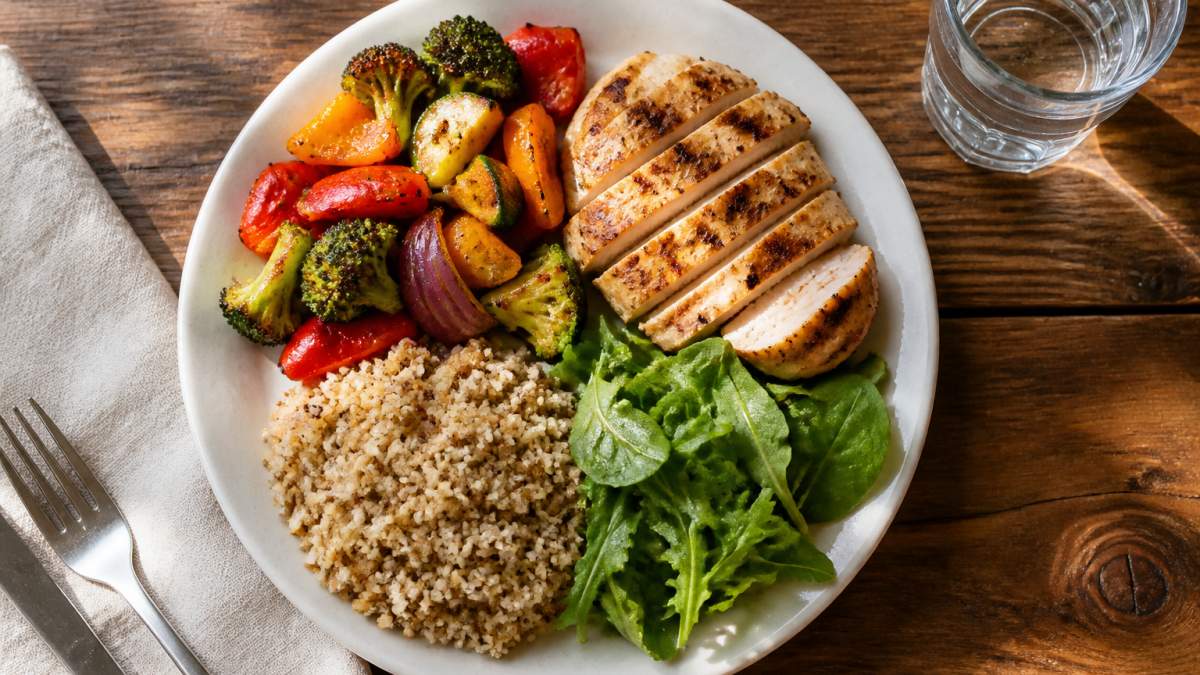
A workable plate template:
- Protein: a palm-sized portion of fish, chicken, eggs, tofu, or legumes
- Vegetables: half the plate, cooked or raw, with olive oil or herbs
- Carbohydrate: a cupped-hand portion of whole grains, potatoes, or beans
For GLP-1 users, appetite suppression makes protein easy to skip. Prioritize it at the first meal of the day, when hunger is often highest.
Your Sustainable Diet for Weight Loss Meal Plan
A sustainable diet for weight loss meal plan follows a repeatable structure rather than a rigid menu. Structure beats perfection, because you can rebuild any meal from the template even when the day goes sideways.
The pattern we recommend:
- Breakfast: protein plus fiber, such as eggs with vegetables or Greek yogurt with berries and seeds
- Lunch: the plate template, built from leftovers where possible
- Dinner: protein, vegetables, and a measured carbohydrate portion
- Snacks: planned, not improvised, such as fruit with nuts or vegetables with hummus
Plan two or three default meals per slot that you genuinely like. Repetition removes decisions, and fewer decisions means fewer lapses.
A 7-Day Diet Plan for Weight Loss You Can Repeat
A 7-day diet plan for weight loss works when it is a rotation, not a rulebook. The week below repeats easily, and each day uses the same plate structure with different ingredients. What makes this repeatable is the portion logic, the prep strategy, and the swap rules that let you rebuild any day when life interferes.
Portion Logic: How Much to Put on the Plate
Most people do not need to count calories to lose weight sustainably. They need a consistent visual portion system.
- Protein: one palm-sized portion per meal (roughly 20-30 grams of protein depending on the source and hand size)
- Vegetables: two cupped-hand portions per meal, or half the plate
- Carbohydrate: one cupped-hand portion per meal, measured cooked
This system is not precise, and it does not need to be. It is consistent enough to create a modest caloric deficit for most people while leaving room for normal variation. If weight is not moving after three to four weeks, tighten the carbohydrate and fat portions slightly before cutting protein.
The 7-Day Rotation
Day | Breakfast | Lunch | Dinner |
|---|---|---|---|
Monday | Eggs with spinach and whole-grain toast | Lentil soup with a side salad | Baked fish, roasted vegetables, potatoes |
Tuesday | Greek yogurt, berries, seeds | Chicken and vegetable grain bowl | Tofu stir-fry with brown rice |
Wednesday | Overnight oats with milk and nuts | Leftover stir-fry | Turkey mince chili with beans |
Thursday | Eggs with tomatoes and mushrooms | Chili with a side salad | Grilled salmon, greens, quinoa |
Friday | Yogurt with fruit and oats | Salmon salad with olive oil | Chickpea and vegetable curry |
Saturday | Whole-grain toast with eggs | Bean and vegetable soup | Roast chicken, vegetables, potatoes |
Sunday | Oats with milk, nuts, fruit | Leftover roast chicken salad | Lentil and vegetable bake |
Prep Strategy: Why This Week Works
The plan is built around three prep anchors that make the week repeatable without daily cooking from scratch:
- Batch protein on Sunday and Wednesday. Cook a large batch of chicken, lentils, or chili and portion it into containers. Protein is the hardest element to improvise when you are tired, and it protects muscle and satiety.
- Cook once, eat twice. Monday's baked fish becomes Tuesday's grain bowl protein. Wednesday's stir-fry becomes Thursday's lunch. Saturday's roast chicken becomes Sunday's salad.
- Keep a freezer backup. Frozen vegetables, tinned legumes, and frozen fish are the emergency layer. If you miss a prep day, you can still build a plate from the template in under fifteen minutes.
Swap Rules: How to Adapt Any Day
No plan survives contact with real life unchanged. Use these swap rules to keep the structure when ingredients, preferences, or budget change: (Source: research on the role of protein and fiber in satiety)
- Protein swap: any palm-sized portion of fish, chicken, eggs, tofu, tempeh, or legumes can replace any other. Keep the portion size, change the source.
- Carbohydrate swap: any cupped-hand portion of whole grains, potatoes, beans, or lentils can replace any other. Beans and lentils count as both carbohydrate and fiber, which makes them a useful double.
- Vegetable swap: any two cupped-hand portions of cooked or raw vegetables. Frozen works. Tinned works. There is no vegetable that breaks the plan.
Watch out: the most common failure point in a repeatable plan is skipping protein at breakfast because you are not hungry yet. If you are on a GLP-1 medication or simply not a morning eater, a protein-forward snack within two hours of waking works as well as a full breakfast.
Adjusting the Plan to Your Energy Needs
This plan is a structure, not a prescription. Start with the hand portions above, track your weight and energy for three weeks, and adjust. If you are losing more than about 1% of body weight per week after the first two weeks, you are likely cutting too aggressively and risking muscle loss. If weight loss has plateaued, review your nutrition, physical activity, sleep, medications, and overall health before making individualized dietary adjustments
A Beginner Diet Plan for Weight Loss for Female Readers
A beginner diet plan for weight loss for female readers should start with protein, fiber, and hydration before it touches anything else.
During perimenopause and menopause, changes in hormones can shift where fat is stored and how easily muscle is maintained. That makes protein intake and physical activity, particularly resistance training, more important, not less.
Start with three changes only:
- Add a protein source to breakfast
- Add one extra portion of vegetables to lunch and dinner
- Replace one sugary drink with water each day
Hold those for two weeks before adding anything else. Small and repeatable beats ambitious and abandoned.
Behavioral Change: The Habits That Make It Last
Behavioral change is where most plans quietly fail. The nutrition is often fine; the habits around it are not. Long-term adherence comes from environment design and self-compassion, not from motivation.
A useful starting framework is to change one habit at a time, attach it to something you already do, and track it simply. The CDC's guidance on healthy weight emphasizes gradual, sustainable change over rapid loss for exactly this reason.
Psychological Barriers to Sustainability
Three barriers come up repeatedly, and each has a specific mechanism and countermeasure.
All-or-nothing thinking turns one missed meal into an abandoned week. The mechanism is dichotomous thinking: the brain categorizes behavior as either perfect or failed.
Emotional eating goes unaddressed, so the plan works until stress arrives. Food provides a reliable, fast reward when other rewards are unavailable or slow.
Unrealistic expectations make normal plateaus feel like failure.
Consistency Over Intensity
Consistency over intensity means a moderate plan followed for a year beats a perfect plan followed for three weeks. Adherence is widely recognized as a key determinant of outcome in long-term weight management, and it tends to drop as plan intensity rises.
Watch out: chasing faster results by cutting calories very low can cost muscle, worsen energy, and trigger rebound eating. If you are on a GLP-1 medication, appetite suppression can make undereating easy without noticing.
Environment Design: The Habit That Does the Work for You
Willpower is a unreliable strategy because it depletes under stress, fatigue, and decision load. Environment design is more reliable because it removes the decision entirely. Three changes do most of the work:
- Make the good choice visible. Put fruit, nuts, and pre-cut vegetables at eye level in the fridge. Put the foods you want to eat less of on a high shelf or in an opaque container. This reduces the friction of the choice you want to make.
- Make the bad choice slightly harder. A bag of crisps on the counter is eaten; the same bag in a cupboard is not. Add one step of friction to foods you want to eat less often, and remove one step from foods you want to eat more often.
- Attach the new habit to an existing one. A protein-forward breakfast is easier to remember if it is attached to the coffee you already make. A ten-minute walk is easier to remember if it is attached to the end of lunch.
Tracking Without Obsession
Tracking works when it is simple enough to do on a bad day. Weigh yourself two or three times a week and look at the weekly average, not the daily number. Track one behavior, not every behavior: the one that matters most for you.
If tracking starts to feel like punishment, reduce it to the weekly weigh-in and the one behavior. The goal is information, not surveillance.
Budget-Friendly and Socially Adaptable Sustainable Eating
Sustainable eating has to survive your bank balance and your social calendar.
For social situations, use a simple approach: eat a protein-rich snack before you go, choose the options closest to your plate template, and enjoy the meal without compensating the next day.
Mindful eating helps here too. Slowing down and noticing fullness makes it easier to stop at comfortable rather than stuffed, in any setting.
Post-Weight Loss Maintenance: Keeping the Results
Maintenance is its own skill.
Weight maintenance typically means keeping protein high, staying physically active, and weighing yourself regularly enough to catch drift early. Expect a range, not a single number. A few kilograms of normal fluctuation is not a relapse.
If weight starts creeping up, return to the plate template and the tracking habit that worked before. Early correction is far easier than starting over.
Choosing Your Anaise Standard Nutrition Pathway
Anaise Standard offers four distinct nutrition pathways built on evidence-informed resources, so you can choose the one that matches your season of life rather than forcing yourself into a generic template.
Our pathways are designed for people navigating GLP-1 treatment, midlife transitions, metabolic health, and everyday family nutrition. Each one focuses on practical guidance for everyday balance: what to put on the plate, how to plan a week, and how to keep going when life interferes.
Frequently Asked Questions
What is the most sustainable diet for weight loss?
The most sustainable diet is one built on whole foods, balanced macronutrients and realistic portions that you can keep eating long term. It includes lean protein, fiber-rich vegetables, whole grains and healthy fats, with room for foods you enjoy. A sustainable diet for weight loss avoids rigid rules and extreme restriction, because those are hard to maintain. The test is simple: could you eat this way in six months or a year without feeling deprived? If not, adjust the plan rather than your willpower.
What does a sustainable diet for weight loss include?
It includes four practical elements: a modest caloric deficit, adequate lean protein to preserve muscle, plenty of fiber from vegetables, fruit and whole grains for satiety, and enough flexibility for social meals and cultural foods. Hydration and consistent physical activity support the plan. Nutrient density matters more than counting every calorie, so build meals around whole foods first. Many people find a structured meal plan helps them apply these principles without deciding from scratch each day.
How do I make a 7-day diet plan for weight loss sustainable?
Plan for repetition, not perfection. Choose seven breakfasts, lunches and dinners you genuinely enjoy, then rotate them with small variations. Batch cook two or three components on a Sunday, keep quick protein and frozen vegetables on hand, and leave one flexible meal for eating out. A 7-day diet plan for weight loss works when it survives a busy week, so build in shortcuts rather than relying on daily cooking from scratch.
Is losing weight quickly ever sustainable?
Fast initial loss is common, but the rate of loss is less important than what happens afterward. Rapid drops often come from water loss and can be followed by rebound weight gain if the approach was too restrictive to maintain. Sustainable weight loss is typically gradual, protects muscle mass and is paired with habits you can keep. Rather than chasing a number on a deadline, focus on consistent habits, adequate protein and a plan you can follow through stressful weeks.
What should a beginner diet plan for weight loss for female readers focus on?
Start with three changes: protein at every meal, a vegetable at most meals, and regular meal times. Women, particularly in perimenopause and menopause, benefit from adequate protein and resistance training to support muscle preservation as metabolic health shifts. Avoid very low calorie plans that leave you hungry and tired. A beginner plan should be simple enough to repeat and flexible enough to survive real life, then refined as habits settle.
Do I need supplements or meal replacements on a sustainable diet?
Most people do not. Whole foods provide the protein, fiber and micronutrients a sustainable diet depends on. Supplements may be relevant in specific situations, such as a diagnosed deficiency, and that decision belongs with a qualified professional who knows your history. Meal replacements can help short term but rarely teach the habits that support weight maintenance. Prioritize food-first strategies and seek individual advice before adding products.
The hardest part of any nutrition plan is not knowing what to eat. It is keeping the habit through a busy week, a shift change, or a family dinner. That is exactly the gap Anaise Standard is built to close, with evidence-informed resources, four distinct nutrition pathways, and practical guidance for everyday balance across GLP-1, midlife, and metabolic health. Get started with Anaise Standard and build a plan you can genuinely keep.
