
 How-to
5 Meal Planning Steps for Shift Workers
Quick Summary
Meal planning for shift workers works best when you anchor meals to three fixed points in your shift rather than to clock times: a main meal before the shift, a second meal or substantial snack during the longest break, and a lighter meal after you finish. Protein, complex carbohydrates, and fiber provide steady energy across a long shift.
- Eat a main meal before the shift, a meal or substantial snack during the longest break, and a light meal after.
- Pack a handheld snack for breaks under 15 minutes and keep a shelf-stable backup for missed breaks.
- Batch cook one or two prep sessions, labeling portions with the date and refrigerating what you use within a few days.
- Check your meal plan each Sunday and re-anchor it to any new shift start.
- Pack an insulated bag with at least one frozen cold pack for a 12-hour night shift.
Table of Contents
- Map Your Meals Around Your Shift Pattern
- Prep and Store Easy Meals for Shift Workers
- Build Your 12 Hour Night Shift Meal Plan This Week
- Frequently Asked Questions
Map Your Meals Around Your Shift Pattern
Shift work makes regular eating hard, which is where meal planning for shift workers pays off. Anchor meals to three fixed points rather than clock times: a main meal before the shift, a second meal or substantial snack during the longest break, and a lighter meal after you finish. Protein, complex carbohydrates, and fiber are generally the building blocks of steady energy across a long shift. (Source: protect the sleep window)
| Shift type | Before shift | During shift | After shift |
|---|---|---|---|
| Day (7am-3pm) | Full breakfast with protein and fiber, e.g. eggs, oats, fruit | Lunch at the midpoint break; a small snack if the shift runs long | Light dinner; avoid a heavy meal within 2 hours of bed |
| Evening (3pm-11pm) | Main meal around 1-2pm, before you leave | Meal at the midpoint break; snack in the late evening if hunger hits | Small, low-fat snack before sleep rather than a full meal |
| Night (11pm-7am) | Main meal in the late afternoon or early evening, before the shift | Light meal or substantial snack around 2-3am; small snack near 5am if needed | Light meal after the shift, then sleep; keep it small and low in fat |
| 12-hour day (7am-7pm) | Full breakfast; pack a lunch and two snacks | Lunch at the midpoint; snack mid-morning and mid-afternoon | Light dinner; hydrate through the evening |
| 12-hour night (7pm-7am) | Main meal in the late afternoon; pack a meal and two snacks | Meal around midnight-1am; snack around 4-5am | Light meal after the shift, then sleep |
| Rotating (changes weekly) | Re-anchor meals to the new shift start on day one of each rotation | Keep the same relative pattern: main meal before, lighter meal during, light meal after | Protect the sleep window first, then place meals around it |
Limited or unpredictable breaks can make a plan hard to follow, so build a contingency in: pack a handheld snack for breaks under 15 minutes, keep a shelf-stable backup (nuts, cereal bar, dried fruit) for missed breaks, and add a second snack with protein and fiber if the work is physically demanding. Check the plan each Sunday and re-anchor to any new shift start.
Prep and Store Easy Meals for Shift Workers
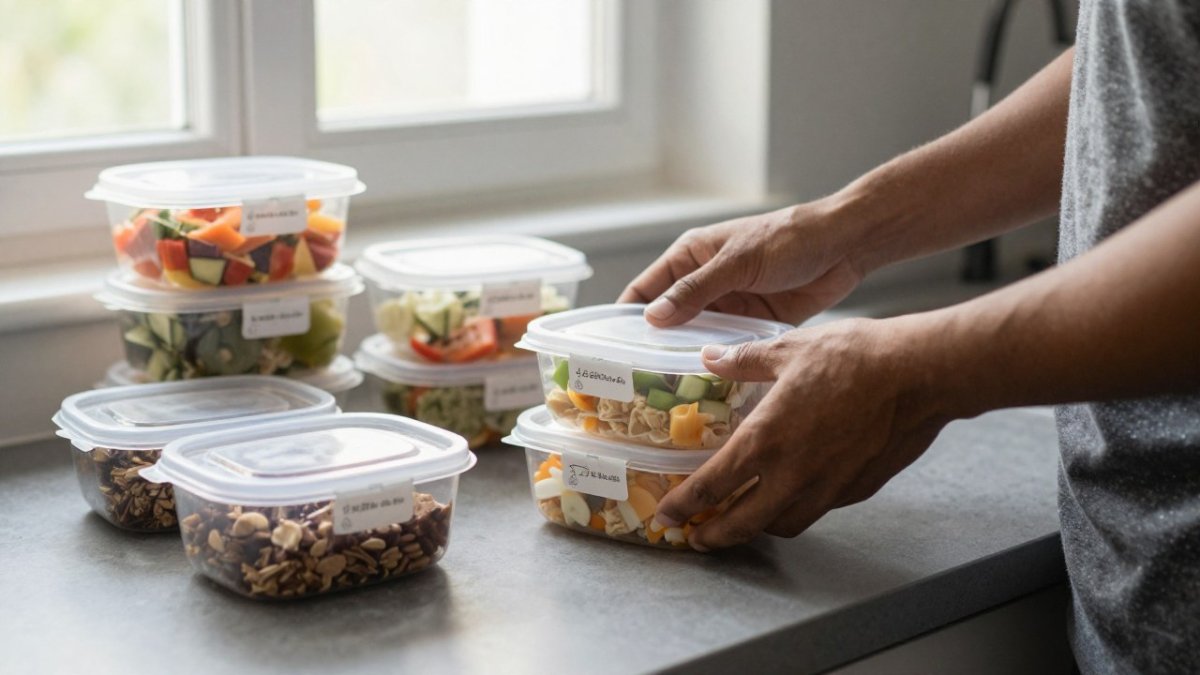
Batch cooking can help when your schedule changes week to week, so consider setting aside one or two prep sessions: cook two proteins (eggs, chicken, or lentils), roast a tray of vegetables, portion grains into single-serve containers, label with the date, and refrigerate what you will use within a few days while freezing the rest. Easy meal ideas include vegetable soup, wholegrain wraps with yogurt and chicken, and salads with eggs and nuts, and pack fruit and cheese snacks so you do not rely on vending machines.
Build Your 12 Hour Night Shift Meal Plan This Week
Use the timing from your shift pattern to build a simple weekly plan. The sample below is a full 12-hour night shift day, with prep and packing notes so it survives a real shift rather than only looking good on paper.
| Time | Meal | Example | Prep and packing note |
|---|---|---|---|
| Late afternoon, before shift | Main meal | Wholegrain pasta, vegetables, chicken | Cook and portion the night before; reheat at home where possible |
| Around midnight-1am | Meal | Rice, lentils, roasted vegetables | Pack in an insulated container; reheat if a microwave is available |
| Around 4-5am | Snack | Yogurt with nuts and fruit | Keep the yogurt in an insulated bag with a cold pack |
| After shift, before sleep | Light meal | Vegetable soup and a wholegrain sandwich | Keep it small and low in fat so sleep comes easier |
| After sleep | Balanced meal | Eggs, salad, and a small portion of whole grains | This is your reset meal; eat it before the next shift |
Repeat this pattern for your planned night shifts, adjusting portions to your appetite, and drink water through the shift while limiting sugary drinks and heavy late-night snacks.
Packing and storage for a 12-hour night shift. Break-room access varies, so pack for the worst case: an insulated bag with at least one frozen cold pack, plus shelf-stable backups for missed breaks. Cooked meals should be stored in the fridge promptly and frozen if you will not eat them soon; check current food-safety guidance from an official source for storage times, and reheat only once (the WHO). If there is no microwave, choose meals that eat well cold, grain bowls, wraps, pasta salads.
Adapting the plan to your diet. The template is a pattern, not a fixed menu: swap the protein for tofu, tempeh, or beans for a vegetarian or vegan version (adding a vitamin B12 source if fully plant-based), replace nuts with seeds or roasted chickpeas for allergy-aware plans, and use lentils, eggs, oats, frozen vegetables, and canned fish on a budget. If your cultural diet centers on rice, flatbread, or noodles, keep those as the carbohydrate base and build protein and vegetables around them.
What the evidence does and does not say. General guidance on regular meals, protein, fiber, and hydration is well established, but advice about eating overnight is less settled: general research on circadian rhythms suggests the body may handle food differently at night, so many people find lighter overnight meals and careful caffeine timing helpful; a healthcare professional can advise on what fits your situation.
Frequently Asked Questions
What is a good meal plan for night shift workers?
A good night shift meal plan puts a balanced main meal before the shift, a protein and fiber snack in the middle, and a lighter meal after you finish. Keep the main meal close to a regular mealtime for your body, even if that is mid-afternoon. Build each meal from protein, complex carbohydrates and vegetables, and keep water within reach. Plan the same structure for each shift in the rotation so the pattern is easy to repeat.
What are some good meal ideas for shift workers?
Good options are meals that reheat well and hold their texture: vegetable soup, wholegrain sandwiches with egg or cheese, salads with chicken or chickpeas, and rice bowls with vegetables. For snacks, choose yogurt, nuts, fruit or a boiled egg. These foods give steady energy and are easy to pack in a cooler bag. Prepare two or three of them at the start of the week to cut down on decisions during a busy shift.
How can shift workers keep energy steady during night shifts?
Eat a balanced meal before your shift, then spread smaller snacks through the night so you are not relying on one large meal. Combine protein, fiber and complex carbohydrates in each snack to slow digestion. Limit heavy, fried or very sugary foods, which tend to cause energy dips. Drink water regularly and keep caffeine early in the shift to protect your sleep afterwards.